Saturday, May 14, 2011

Finding Michael Vale

Sam Breakstone is proving to be an elusive target.  But the man who portrayed him is a little more accessible.


It's actor Michael Vale.  You probably know him better like this:


He was Fred the Baker for fifteen straight years of Dunkin Donuts commercials.  It's hard to find a longer-running ad campaign that featured live actors.  Absolut Vodka has been running the same campaign since 1980.  But there print ads star a bottle ... a bottle that doesn't age.  Or star in The Graduate.

Vale was born in Brooklyn in 1922, the son of non-practicing Eastern European Jews.  Even as a child, his friends called him "the actor."  He served in the European theater in World War II. He went on to study acting at the Dramatic Workshop in New York City.  He appeared on Broadway in plays like California Suite and in films like this one:

Hey, it's my second Dustin Hoffman reference!
But Vale was best known for his acting in more than 1,300 television commercials.  Vale passed away in 2005 at the age of 83.  But I had the good fortune of speaking to his wife, Nancy.  I also traded emails with his daughter, Ivy.

Visit here to learn about the fine charity
supported by the Vale family.
What emerged was a picture of a devoted family man who enjoyed his work.  Mrs. Vale told me that Michael liked doing the Breakstone's commercials for several reasons.  First, he really was a fan of the products.  She called him a foodie who felt good about the quality of the foods he was selling.

She remembered a food show on the Chelsea Piers when he was asked by the marketing firm to make an appearance.  At the end  of the event, they were throwing away unused product.  Michael came back to their apartment carrying two 40-gallon containers of Breakstone's sour cream.  

Another reason Michael was happy with Breakstone's was that he respected the ad agency doing the campaign, Geers Gross.  In fact, he felt a lot of mutual respect.  Michael found that the agency was very responsive to his needs and opinions as an actor.  
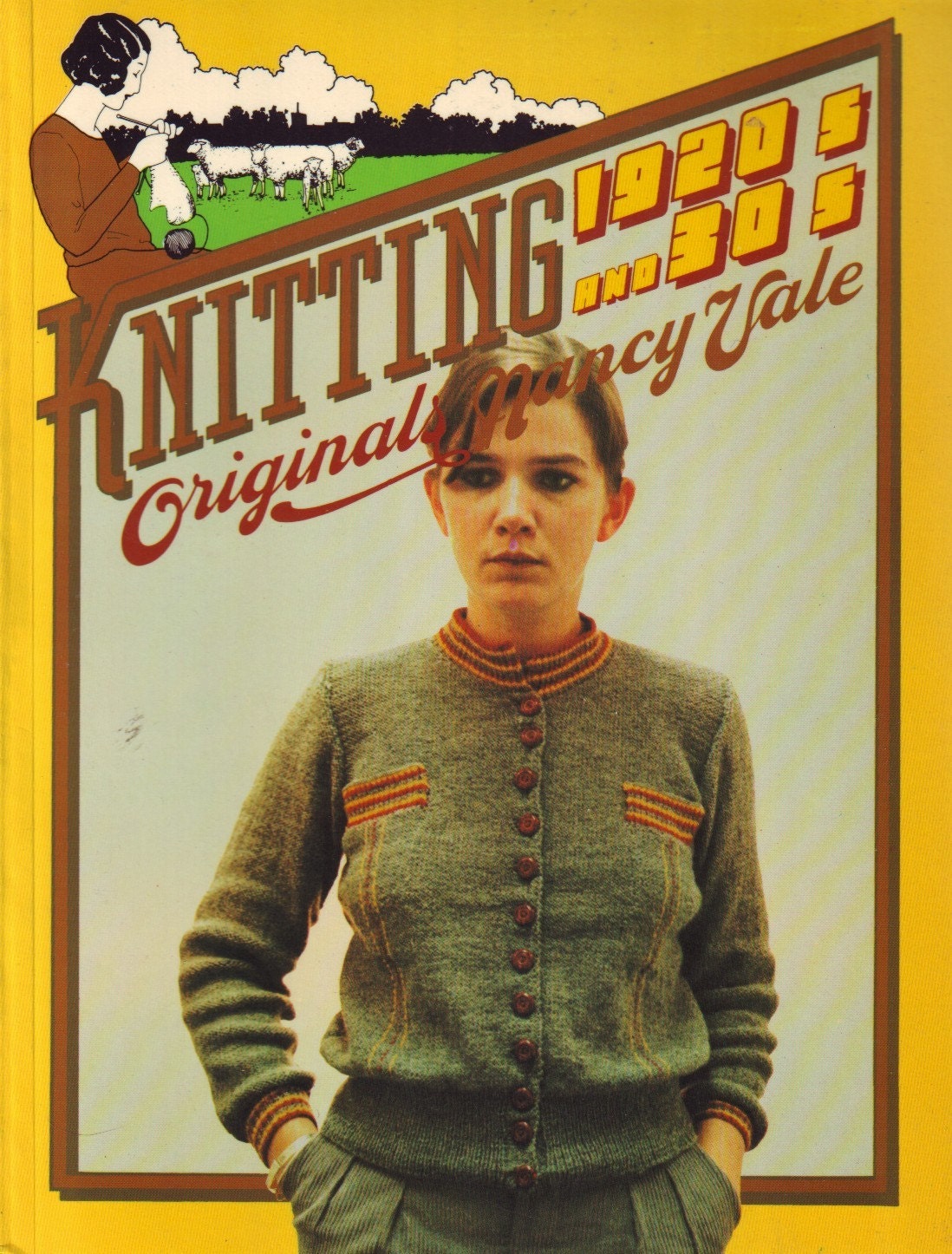
The Internet seems to think this
is Nancy Vale, too.


Vale even liked the little dog who would bite at his cuffs at the end of every commercial.  He overcame an terrible allergy to pets before starring in a dog food commercial, and then being harassed by one for the length of the Breakstone's run.  Though they went through several dogs, Nancy remembers the first one as being very smart.  They called him "Jack the nipper."  At one point, Vale was bitten by one of the Breakstone's dogs.  According to his wife, he blamed himself completely.  But after that, he wore padding under his costume.

Vale taught seminars in commercial acting, especially how to audition for commercials.  He spoke of capturing the product in a very intense way.  It appears to have worked.  He was believable and relatible in his ads, while delivering the main marketing message - our sour cream has a historic pedigree; we work tirelessly to make fresh donuts for you every morning.
Both Nancy Vale and her her daughter Ivy (with whom I've traded emails), spoke with great fondness for Michael.  They both agree that he loved his fans and that he was warm and generous with his time.

The Vale's children both stayed in the arts.  And Nancy Vale says that's how they wanted it to be.  They prayed and hoped their children wouldn't be doctors or lawyers (which hurt my lawyer feelings a little).  Their son is a writer and dealer in Rock and Roll memorabilia. in Los Angeles.  Their daughter, Ivy, and her husband, Rick Reil, are musicians.  Their band, The Wyld Old Souls, just released a new album.

Go to the CD Release Party June 11 in New York City
The reason I embarked upon this project was because Michael Vale made me believe in Sam Breakstone.  He did his job superbly.  It was gratifying to know that the warmth in his eyes, even as Breakstone, was not an act.  He was as good and loving as I had hoped.

Mrs. Vale has promised to look for some memorabilia of the Breakstone's campaign.  Come back for updates.


Wednesday, May 11, 2011

Finding New Buttons

Check out the new gadget on the right side. Now you can share posts directly to social sites like Technorati, Digg and Reddit.

Facebook and Twitter buttons are at the bottom of every article.

I can't thank you all enough for the support.

Finding Social Media

Advertising on TV these days is pretty straightforward.  You watch a show, the act ends, you see four minutes of commercials, and then it's back to the show.  Sure, ads can creep into TV shows as product placement.  But they're usually so obvious that they're laughable.  Check out this ridiculous thirty seconds from Hawaii Five-0 where they shill for Microsoft.  "Bing it."  Really?  Really?

Sorry you had to watch that.  Here's Grace Park.
Incidentally, it's likely Microsoft just threw away their money.  For audiences to remember the product positively, product placement should be integral to the plot and involve the main character.

On TV, we know how advertisers are likely to approach us and advertisers know when we're likely to be receptive.  We've created a mutual understanding between producers and consumers.  We even have a mutual understanding with unacceptable producers.  Cigarette companies won't show ads on TV at all (although they used to).  Instead, they just do this:

Subtle, guys.  Really subtle.
And regular commercial advertising works.  The Sam Breakstone I came to trust in the 1970's existed entirely within the realm of traditional television commercials.  Thirty-five years later, I'm still buying Breakstone's.

The consumer-producer pact starts to break down, though, when we move to the internet.  More than fifteen years into the experiment, and advertisers still can't figure out how to use their computers.  They can pay search engines to put their links up at the top.  They can buy our information to send us earily specific targeted ads.  But they're still just flailing.  Because they can spend millions and millions of dollars and still get schooled by a thirteen year-old girl:

135 million hits. 135 Million Damn Hits.
Nowhere are advertisers more lost than social media.  Every single marketing campaign includes some stab at  penetrating the billions of hits a day people make to check out their favorite blogs, tweets, and status updates - to get past the boundaries of savvy consumers and insinuate themselves into our social consciousness.  Some are epic failures, but most are just confusing, unfocused and a little embarrassing.

That's where the Breakstone's social media campaigns fall.  They're not very good, a little obvious, and not at all convincing.  Should a brand like Breakstone's really even have a Facebook page?  Does it at all mesh with their brand message - high quality nineteenth-century craftsmanship?  Here are some of Breakstone's attempts at social media marketing (or, at least, the attempts of the consultancy firm hired by Kraft and/or their primary advertising agency).

Breakstone's teamed up with Better Homes and Gardens this Easter to offer some recipes and run a mild sweepstakes (top prize was $2,500.00).  Things got weird when they started paying bloggers to mention Breakstone's a whole lot.  Kristen at Dine & DishDine & Dish suddenly had a whole lot to say about Breakstone's:
Thank you to Breakstone’s Sour Cream and Better Homes and Gardens for inspiring me to get creative in my kitchen this Easter. The Pepper-Crusted Pork Loin with Sour Cream and Onion Sauce is seriously one of the tastiest pork loin dishes I’ve had and I don’t get crafty enough around here. It was fun to trade in my spatula for a hot glue gun for a bit. I can’t wait to do it some more.  Don’t forget, Breakstone’s Sour Cream and Better Homes and Gardens are giving you the chance to win $2500 plus the opportunity for daily prizes as well! Make sure to share your favorite holiday traditions on their site (takes less than a minute) and you could possibly win the money to create your ultimate Easter celebration! Good luck!
Kristen discloses that it's a paid promotion, but insists the words and the photos are her own.  Still, I'm starting to get the idea that this sweapstakes may just be a way to collect information for some targeted emails down the road.  It's the one thing that a TV commercial can't do:  "Identify yourself as a person who cares about our message so we can spend less by only advertising to you."

Erin, at 5 Dollar Dinners took a similar deal.  This is a blog that I had actually heard of and spent time at.  She wrote:
I just love how Breakstone’s wants to help us make their next holiday celebration easy, fun, and delicious. I love how they have created such an amazing resource for creating a beautiful and simple holiday meal. I’ve spent quite a bit of time on the site looking for fun new ideas and recipes to try this Easter.  I’m thinking that the Cauliflower and Broccoli Au Gratin would make a lovely side dish on the table, followed by my Spiced Pear Sour Cream Bundt Cake for a light and fluff-ilicous dessert!
Erin discloses that it's a sponsored post.  I wrote to ask her about it.  I was hoping she could tell me the name of the agency that contacted her, the amount of money paid, and whether any content, pictures or wording was supplied.  Erin was kind enough to write back but only to tell me that she couldn't give me the information.  It's a blow to consumers, though, not to be able to know at least which words are being paid for and which aren't.  Is there any way for Erin or Kristen to offer an unbiased opinion again?  Must we write them off as an arm of the commercial media?

It's too bad.  The recipes looked excellent.

Blogs aside, we come to the horrible train wreck that is Breakstone's Facebook page.  At first, it seems like a pretty static magazine insert.  You can get recipes, watch ads, see their lineup of products, and hear them brag again that Breakstone's was established in 1882 (it wasn't).  But then you see that 14,791 people "like" the page.  That's 14,791 people who automatically spammed their friends with a Breakstone's ad when they hit the "like" button.

That is, of course, if these people even exist.  Teresa Smith's profile is blank except to profess her love for very specific food items.  She has one friend.  Jessica Sanko Vernon's profile is nearly empty, but she wrote on Breakstone's wall, ">Well done, Breakstone's!! So pleased that you have made a dip that is oil and msg free!!!! I'm enjoying the Buffalo Sour Cream Dip now!! It's delicious!! Thank you!!!"  Three exclamation points?  She must really love Breakstone's.

But all of this pales in comparison to the recent Breakstone challenge.  If you "like" Breakstone's page, you can play a mini-game called "Chip-Dip-Click."  This entitles you to a $0.50 coupon for sour cream.  It was pushed here, here and lots of other places.

Send an ad by your own hand to all of your Facebook friends.  Make it look like you personally endorse our product.  Show your mom an ad she'll trust because it will have a picture of your face on it.  And get fifty cents.  The cost, I believe, may be too high.

Breakstone's is by no means alone in trying to turn you into a zombie shill (or trying to get you to listen to a zombie shill).  But that doesn't mean they're right.

Sour cream should taste good.  I really don't care which brand is preferred by the girl I went to summer camp with when I was 14.  Will most internet users be as jaded?

Sorry for the rhetoric.  Here's Grace Park:

Hooray!

Tuesday, May 10, 2011

Finding Out What Happened In 1882

It says it on every Breakstone's product.  Established 1882.


And it's a point of considerable bragging.  Kraft has said, "In 1882, two Lithuanian brothers, Joseph and Isaac Breakstone, opened a small dairy on New York's lower east side. Consistently delivering high quality, pure dairy products, their business prospered and expanded."  

That text is gone now from the Breakstone's website, but continues to be quoted in places like this and this.

Kraft hasn't exactly abandoned the claim.  Recently (in terms of the history of the product), Kraft employed Landor and Associates, a large brand consulting and design firm, to "help reestablish Breakstone’s as the market leader and reconnect the brand with its consumers."

Now, the very existence of Landor and Associates is a little bit unnerving.  Read this quote from their website while listening to this:  
It used to be: Build products first, build brands later. Our strategy is just the opposite: Start with your brand promise. Lead with it. Turn your brand into the driver of your business, not just another way of packaging it.
In fairness, Landor isn't the cause of the problem.  They're right when they observe, "In the escalating din of global choice and competition, brands are the most effective way of cutting through the racket to reach people's hearts and minds."  It's not the most honest way; it is, however, the most effective.


Landor's philosophy led it to emphasize a few particular Breakstone claims.  One that stands out:  heritage.  They cleaned up the Breakstone's containers.
A design for packaging was also created, inspired by the idea of a classic steakhouse with its heritage and esteemed reputation. Landor used red, a strong equity for Breakstone’s, as the hero, and removed all ribbons and flourishes from the previous design. 
The result was that two words grew in importance on the Breakstone's label:  Established 1882.


Incidentally, one might note that Kraft claims that Jacob and Isaac Breakstone founded the brand - not Sam Breakstone, just Jacob and Isaac.  But this article isn't about who.  It's about when.


When was Breakstone's established?  According to this exhaustively researched geneology by Rabbi Jeffrey Marx, it wasn't 1882.


Census, immigration, naturalization and marriage records, as well as business listings in New York and family histories show that Joseph came to the US sometime between 1878 and 1882.  The first record of him is his 1884 marriage certificate.  A little more is known about Isaac.  Most records agree that he came from Lithuania in 1882.  A family story states that Joe "met him at the pier."


Did Isaac hop off the boat and open a dairy with Joseph?  Records show a more circuitous route into the business.  Joesph was a peddler and set Isaac up peddling picture frames, and possibly Christian religious pictures.  Between 1882 and 1884, the brothers may have lived in Scranton, Pennsylvania.  A Joseph and Isaac Breckstein were listed as peddlers there.  By 1884, both men appear to be back in New York City (having, I imaging beaten Michael Scott's great-great grandfather out of a job with corporate).


In 1885, Joseph opens a grocery store at 27 Orchard Street in Manhattan.  Here it is today..  This is probably the first time Joe is involved at all with dairy, but Isaac continues to peddle dry goods.  In 1888, Isaac begins selling milk and dairy.  By 1889, Joseph has a store on Division Street in Manhattan.  Isaac opens a store at 602 Myrtle Avenue in Brooklyn.  Here's the area just down the block today:


Johnny thought, `This place sure has changed in 120 years.


By 1896, all manner of Breakstone relatives are selling dairy all over the city.  It`s just that none of them are doing it together.  Joseph has a milk business on Division Street.  Isaac closes his Brooklyn store.  A cousin, Morris, had his own dairy store.  Another cousin, Hyman, sells dairy and eggs at yet another store.


It is only in 1897 that Joseph and Isaac, with the help of Morris, establish Breakstone Bros.  It is a general     grocery with some dairy products.  They apply to trademark their name in 1906.


But the records seem to state that there was no establishment by the Breakstone brothers of anything in 1882, except that they probably established that they enjoyed America a whole lot better than Lithuania.


Is the claim on the Breakstone`s label a lie?  I don't know exactly.  Something may have been established in 1882.  But the most exhaustive account says that nothing was.  One letter by a Breakstone relative mentions 1882 as the start of the business, but government records make that claim very unlikely. 


As a side note, if you tell the Federal Trade Commission about this, Kraft will basically have to change their packaging.  Oh, they'll get lawyers involved.  They'll make quite a lot of noise.


Yeah, we're bad-ass.
But they will change the packaging.  They'll have no choice.  The FTC will eventually force them.  And the world might get a step closer to hearing the truth about our food.


Look at them.  They are totally getting ready to weigh that duck ... or whatever it is.
None of this makes Breakstone's taste any different.  It doesn't affect the quality of the products in any way at all.  Yet it does subtly alter the public's assumptions about the product.  No longer would people think to themselves that, when they buy Breakstone's, they're buying the care and craftsmanship people showed in 1882.

But is there any reason for people to think that at all?  Is there any evidence that 1882 was a better year for care and craftsmanship than 1982?  Is there any reason why a local dairy producer's products are necessarily superior to a national producer?  Breakstone's was not established in 1882.  Kraft shouldn't say it was.  And, most importantly, consumers shouldn't care.  

Sunday, May 8, 2011

Finding Nathan Handwerker

The Nathan's Famous of today was envisioned almost in its entirety by its founder, Nathan Handwerker.

Nathan is the one on the left looking all capitalist and stuff.
Nathan passed away on March 24, 1974, at the age of 82.  He lived long enough to see his company go public in 1970.  He is buried in Mt. Lebanon Cemetery in Glendale, Queens, just south of Myrtle Avenue, a short walk from the sanctuary..

His wife, Ida, who developed the recipe for Nathan's franks as a 19 year-old newlywed, died in 1976 at the age of 79.  She lays next to him.  Nearby is their daughter-in-law, Dorothy, who passed away in 2009.  Along with her husband, she helped create the most famous Nathan's location off of the boardwalk, Nathan's Roadside Rest in Oceanside,  Long Island.

Murray Handwerker, immortalized as a toddler in a picture of the original Coney Island Nathan's, is almost 90 and still living.  Aside from authoring a hot dog cookbook, he has served as a trustee of Ithaca College and a patron of the arts.  He has six children and, as of 2009, five grandchildren.

Saturday, May 7, 2011

FSB Presents: Great Moments In Inviting Consumers To Delude Themselves


Nathan Handwerker had a problem: his product's greatest selling point was also its greatest weakness.

Born in 1892 in Poland, Nathan emigrated to New York with his family in 1902.  In 1915, he found work at Feltman's hot dog stand on Coney Island.  Charles Feltman hadn't invented the hot dog.  He'd just had the idea to put it in a bun, instantly transforming an obscure German sausage into fast food.  Feltman's was a success and a favorite of vaudville performers like Eddie Cantor and Jimmy Durante.

When Feltman's raised their prices from five to ten cents, Cantor and Durante worried they'd starve.  They encouraged Handwerker to go out on his own.  In 1916, Handwerker did.  His hot dog stand, literally within sight of Feltman's, sold his 19 year-old wife's sausages.

It was the first hot dog that was 100% beef.  The public wasn't so sure.  The low price led to rumors of horse meat and dubious sanitary conditions.
Who wouldn't trust a place where the potato chips cost twice as much as the hot dogs?
Handwerker found a way to combat the public's perception.  He offered free franks to the doctors and nurses at Coney Island Hospital so long as they wore their white lab coats while they ate.

This photo may have been doctored.
It was a brazen act of non-lying.  The public, Handwerker hoped, would see doctors eating his food and infer some sort of medical endorsement where none existed.

You may think this stunt only a bit of 1900's wackery, but many accuse President Obama's White House of the very same thing.  When 150 doctors were invited to attend a 2009 White House rally in support of health care, they were supposedly asked to show up wearing their lab coats.  For those who forgot, the White House is accused of handing out extra coats they had on hand.

Some medical personnel took Handwerker up on his offer, but reportedly not enough for his campaign to succeed.  It may have been a display of turn-of-the-century medical ethics.  Or maybe a free hot dog wasn't enough of an inducement to wear one's lab coat over a suit on the beach in the middle of summer.

With the physician turnout underwhelming, Handwerker did the only reasonable thing:  He dressed vagrants up in lab coats borrowed from a costume shop and fed them hot dogs.  He even posted a sign, "If doctors eat our hot dogs, you know they're great."  Not healthy.  Not good for you.  Not sanitary.  Just great.

Did the stunt work?

Today, Nathan's Famous takes in $50 million a year.  In company owned restaurants, 246 franchises, limited menu programs with other retailers (like Aunt Annie's), and supermarket sales, Nathan's sold over 400 million hot dogs in 2010.  They've even got fifteen restaurants in Kuwait.

Still,  Nathan's isn't exactly Nathan's.  Among others, they license their trademark to SMG, Inc. to make their fast food and supermarket franks, John Morrell and Co. (a subsidiary of Smithfield Foods) to make some fast food and cafeteria franks, and ConAgra to make their french fries and onion rings (for restaurants and supermarkets).  According to its 2010 annual report, Nathan's Famous does not appear to make any of its own food.

There is no denying this essential fact, however:  If Nathan's Famous did not offer a consistent product that people liked to eat, no amount of trickery in the world could have kept them in business for ninety years.
Some people can eat 68 at a time.
But for fostering a false public perception in the pursuit of sales, Nathan Handwerker earns the first ever spot in the FSB archives of Great Moments In Inviting Consumers To Delude Themselves!

________________________
Much of the information in this article comes from The Encyclopedia of Jewish Foods by Gil Marks. 

When Is Breakstone's Not Breakstone's?


Sam Breakstone apparently had a thing about milk.  According to one 1977 commercial, he turned away most milk as not good enough for his dairy products.

Some time after Breakstone supposedly perfected his dairy recipes, Breakstone's ended up in the hands of Kraft.  That may be okay.  Perhaps Kraft dedicated itself to meeting his high standards.  Or, perhaps Kraft considered Breakstone's as a brand name under which to market whatever products they were making anyway.  They wouldn't just license the name - collecting a yearly fee for allowing somebody else to call its products Breakstone's.

Meet the Breakstone's line of butters:


and the rest of the line of products.

These Breakstone's butters are manufactured by Keller's Creamery, under license by Kraft.  The current incarnation of Keller's dates only from about 2000, but the old brand of Keller's butters go back over a hundred years.  Keller's produces BordenHotel Bar, and the very foreign-sounding Plugra.

Despite all of these different brands, Keller Creamery appears to manufacture all of them in its plant in Winnsboro, Texas.  You can see the factory from above.

Now, I find it difficult to believe that Keller's, a plant in Texas, is adhering to the strict expectations and recipes of Sam Breakstone, who seems to have been a New Yorker.  It's not impossible, though, that all of those butters under all those labels are subtly different.  Plugra is definitely a different product than the usual butter (less moisture, more fat).

And there's at least one difference between Breakstone's and the other butters.  Breakstone's proudly announces this it's certified Kosher.  I'm not sure what that entails - they sang the dreidel song to the cows or something.  But you don't see Borden's bragging about being Kosher.

On another note, here is the Kosher certificate for Borden - the same as for Breakstone.

And this doesn't end with Keller's.  Kraft doesn't license the Breakstone's name to Keller's.  Kraft licenses it to Dairy Farmers of America, Inc., of which Keller's is just one subsidiary.  It says it right there on the website:   Processed and Marketed by Dairy Farmers of America, Inc., under a trademark owned and licensed from Kraft Foods, Inc. 


The DFA may sound like a friendly co-op of milk farmers, but it's big business.  They have about 9,572 member farmers, 3,000 employees, and 21 manufacturing plants (none in Breakstone's original home of New York).  They're milking 1.8 million cows for $8.1 billion in net sales in 2010.

The DFA doesn't just make milk, butter and cheese.  They own Agri-Max financial, which loans money to its members farmers.  They even have their own lobbying efforts.  They were even part of a class-action suit alleging monopolistic practices.

There's no doubt the DFA does a lot of good.  It uses its large size and purchasing power to make dairy farming affordable across the US.  It's engaged in green projects and attempts to help farmers actually graze their cattle on real grass in those climates where it's available and makes sense financially.

The question, though, is whether a unique Breakstone's quality and flavor can survive all of this corporate centralization and licensing.  The question is whether there ever was a unique Breakstone's quality and flavor to begin with.

The DFA's license from Kraft seems good evidence that the answer is no.